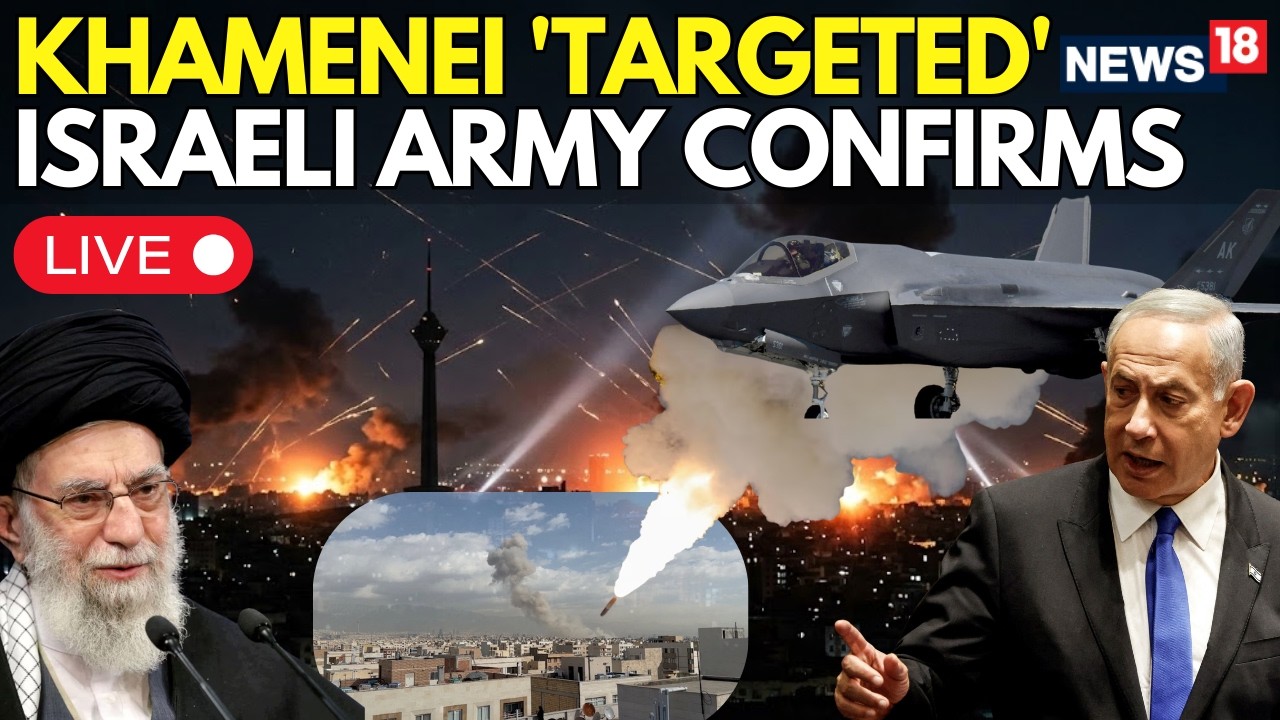
Middle East on Edge: Inside the US-Israel-Iran Escalation
The geopolitical landscape of the Middle East has been dramatically reshaped by a series of unprecedented military exchanges between the United States, Israel, and Iran. What began as coordinated strikes by US and Israeli forces against Iranian targets quickly spiraled into a full-blown regional crisis, marked by retaliatory missile and drone attacks from Tehran and a palpable sense of alarm across the Gulf states. This rapid escalation has pushed an already volatile region to the brink, raising serious questions about the path forward and the potential for a wider, more devastating conflict.
The Spark: Coordinated US-Israel Strikes on Iran
The initial offensive, described by then-President Donald Trump as "major combat operations," unfolded on a Saturday morning. These US-Israeli military operations targeting Iran marked a severe escalation of long-standing tensions. Reports indicated that the strikes, which were coordinated between Washington and Jerusalem, aimed at crippling key Iranian assets. While specific details remain guarded, sources close to the operation confirmed that targets included various military sites, intelligence installations, and government-linked facilities across the Islamic Republic.
President Trump’s rationale for these decisive actions pointed to Iran's alleged development of missiles capable of threatening Europe and a stated desire to secure a deal, accusing Tehran of recalcitrance. In a powerful, if somewhat ambiguous, call, he urged the Iranian populace to "take into their own hands their destiny." Echoing this sentiment, Israeli Prime Minister Benjamin Netanyahu affirmed that the operation sought to create the conditions for Iranians to "take their destiny into their own hands," suggesting a strategic aim beyond mere military deterrence – perhaps even veiled support for internal dissent.
Within Iran, the impact was immediate and discernible. Media outlets reported widespread strikes, with explosions resonating in various cities. In the capital, Tehran, roads leading to the complex of Supreme Leader Ayatollah Ali Khamenei were reportedly closed by authorities, and multiple explosions were heard, including one near Khamenei's office. While Iranian state television acknowledged the explosions, details on their cause or any casualties remained scarce. The ambiguity surrounding the Supreme Leader's immediate whereabouts and condition – recalling previous instances where he was moved to secure locations during times of conflict – only added to the internal uncertainty. These precise and widespread
Israeli strikes on Iran, alongside US involvement, signaled a significant shift in regional strategy,
igniting a major conflict with Iran that demanded immediate global attention.
Iran's Swift and Fierce Retaliation
The response from Tehran was swift, unequivocal, and devastating. Following the initial US-Israeli strikes, Iran launched a massive wave of retaliatory missile and drone attacks. The Islamic Revolutionary Guard Corps (IRGC) wasted no time in issuing a formal statement, asserting that the "first wave of large-scale missile and drone attacks of the Islamic Republic of Iran against the occupied territories has begun," explicitly framing it as a direct response to the "hostile and criminal enemy's aggression."
These retaliatory measures targeted both Israel and US military installations strategically positioned across the Gulf states. The implications were felt acutely across the region. In Israel, a state of emergency was declared, with air raid sirens blaring nationwide as authorities issued "proactive alerts" to prepare the populace for incoming rocket attacks. The skies over both Iran and Israel were promptly closed to civilian air traffic, underscoring the severe and immediate threat.
The reach of Iran's retaliation extended well beyond Israel's borders. Explosions were reported for a second consecutive day across the Gulf, heard in major cities like Dubai (UAE), Manama (Bahrain), and Doha (Qatar). These widespread reports confirmed that US military assets stationed in the Gulf were indeed primary targets, underscoring the regional scope of the conflict. Adding another layer of complexity and danger, the Iran-backed Houthi rebels in Yemen announced their intention to resume attacks on commercial shipping routes, a move that threatens global trade and energy supplies. Crucially, subsequent reports linked Iran's intensified retaliation to the tragic death of its Supreme Leader Ayatollah Ali Khamenei and other top officials in the preceding attacks, a development that could be interpreted as a significant escalation factor. This immediate and widespread Iranian counter-attack effectively showcased how
Iran retaliates, as missile attacks rock Israel and Gulf states.
A Region on High Alert: Broader Ramifications
The unfolding crisis has plunged the Middle East into an unprecedented state of alert, with profound implications for regional stability and global security. The coordinated
frappes israéliennes iran, followed by Tehran's massive retaliation, have created a dangerous feedback loop, where each action invites a more forceful reaction. The involvement of non-state actors like the Houthi rebels further complicates the scenario, making de-escalation a monumental challenge.
The reported targeting and death of Ayatollah Ali Khamenei, if confirmed, marks an extraordinary turning point. Such an event would undoubtedly ignite widespread anger and calls for vengeance within Iran, potentially galvanizing hardline elements and leading to an even more aggressive posture. The ramifications of such a loss for Iranian leadership succession and internal dynamics are immense and could usher in a period of severe instability within the country itself, affecting its external policies dramatically.
Economically, the immediate impact is visible in soaring oil prices and disrupted shipping lanes. The Strait of Hormuz, a critical chokepoint for global oil supplies, becomes inherently more dangerous with increased Houthi activity, threatening a significant portion of the world's energy trade. The human cost, while not yet fully quantified, is also a grave concern, with populations across Israel, Iran, and the Gulf living under the shadow of potential further attacks. International bodies and world powers have undoubtedly launched urgent diplomatic efforts behind the scenes, yet the challenge remains immense given the deeply entrenched hostilities and the high stakes involved.
Navigating the Abyss: What Comes Next?
The immediate future of the Middle East hangs precariously in the balance. The unprecedented nature of the recent escalations means that there is no clear playbook for what comes next. Each move by Washington, Jerusalem, or Tehran carries the potential to either mitigate or exacerbate the conflict.
*
De-escalation Efforts: The primary focus for the international community will be to prevent further military action. This likely involves intense diplomatic back-channels, ceasefire negotiations, and potentially, robust mediation efforts from neutral parties.
*
Internal Dynamics: In Iran, the response to the reported death of its Supreme Leader will be critical. Will it lead to consolidation of power under a new, potentially more aggressive, leadership, or will it trigger internal dissent? In the US and Israel, public and political support for continued military action will be a key factor.
*
Regional Alignment: The conflict forces Arab states in the Gulf to re-evaluate their alliances and security postures. Some may lean further into partnerships with the US and Israel, while others might seek to distance themselves to avoid becoming direct targets.
*
Global Impact: Beyond the immediate region, the crisis has implications for global energy markets, international shipping, and the broader non-proliferation agenda. The threat of nuclear escalation, though not immediate, always looms in the background of a conflict involving Iran.
For citizens and expatriates in the affected regions, staying informed through official government advisories and maintaining preparedness for contingencies remains paramount. For policymakers, the urgent task is to find off-ramps from this perilous escalation, emphasizing diplomacy and strategic restraint over further military confrontation.
Conclusion
The recent US-Israel-Iran escalation marks a dangerous and transformative chapter in Middle Eastern history. The coordinated strikes, followed by Iran's potent retaliation, have shattered any lingering illusions of a stable regional balance. With key leaders reportedly targeted and strategic assets engaged, the stakes could not be higher. The path forward is fraught with peril, demanding a delicate balance of deterrence and diplomacy from all parties involved. The world watches anxiously as the Middle East, once again, stands on the precipice of an uncertain future, hoping that restraint can ultimately prevail over the devastating logic of war.